
Q&A: Traveling While Muslim — Practical Answers to Real Questions
Back to CategoryQ&A: Traveling While Muslim — Practical Answers to Real Questions
The Questions Our Muslim Travelers Ask Most
Muslim travelers face a specific set of practical and social considerations that are rarely addressed in mainstream travel guides. The needs are real: finding halal food, locating prayer spaces, navigating non-Muslim environments during Ramadan, understanding how visible Islamic identity (hijab, beard, kufi) will be perceived in different destinations. This Q&A addresses the most frequently asked questions from Muslim members of our travel community.
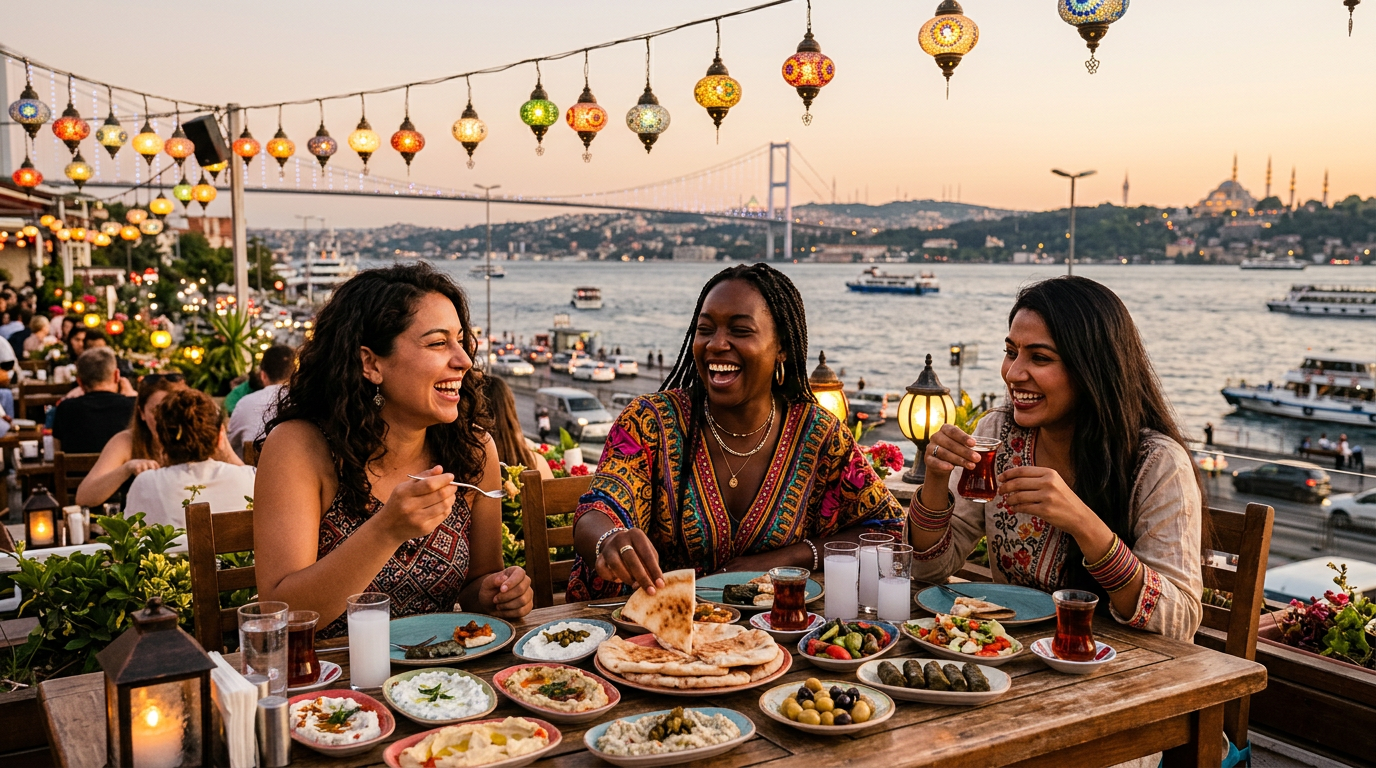
Finding Halal Food Internationally
Q: How do I find halal food in non-Muslim countries?
The HalalTrip and Zabihah apps are the most reliable global directories for halal restaurants, with community-verified listings across 100+ countries. Muslim Pro similarly has a halal food directory integrated with mosque finder and prayer time tools. In major cities, halal food is increasingly available even in non-Muslim-majority countries — London, Paris, and New York have extensive halal food ecosystems. In smaller cities or rural areas, vegetarian and vegan options (which avoid all meat) are the practical default. Seafood is halal in most Islamic jurisprudence, making it a reliable default in coastal destinations.
In destinations with no halal infrastructure (some rural East Asian areas, for example), focus on naturally halal food categories: fresh fruits and vegetables, eggs, most dairy, seafood, and vegetarian dishes. Research specifically the use of alcohol in cooking in local cuisines — French sauces, Chinese marinades, and Japanese mirin all commonly use alcohol in ways that are not obvious from a menu description.
Prayer and Mosque Access
Q: How do I find mosques or prayer spaces when traveling?
Muslim Pro is the essential tool — its integrated mosque finder covers over 100,000 mosques globally and includes prayer direction (qibla) from any GPS location. In cities with significant Muslim populations, Friday Jumu'ah (Friday prayer) is the most significant access point for local mosque communities — attending creates connection with local Muslim travelers and residents that can transform a trip. In destinations without mosques (some remote areas), hotel rooms, airports with quiet rooms, and public parks are practical prayer spaces. Carry a compact travel prayer rug. Airport prayer rooms exist at most major international airports — check the airport's website under "facilities" or ask at information desks.
Traveling During Ramadan
Q: What is it like to travel during Ramadan — as a Muslim traveler, and which destinations are best?
For Muslim travelers, Ramadan travel to Muslim-majority destinations is transformative — the shared experience of iftar (breaking fast at sunset), the communal energy of taraweeh prayers, the extraordinary food culture of Ramadan evenings in Morocco, Egypt, Turkey, or Indonesia creates a travel experience available only during this specific month. Marrakech's Djemaa el-Fna square during Ramadan evenings, Istanbul's Sultanahmet during Ramadan nights, Cairo's Ramadan lantern-lit streets — these are among the most atmospheric urban experiences available in the Muslim world.
For non-fasting activities during Ramadan travel: eating and drinking in public during daylight hours is illegal in several Gulf countries (UAE, Qatar, Saudi Arabia) even for non-Muslim visitors. In other Muslim-majority countries (Morocco, Egypt, Turkey, Indonesia, Malaysia) this is generally tolerated for obvious foreigners. Modest dress is particularly important during Ramadan. Major tourist sites remain open.
Traveling While Visibly Muslim
Q: What should I expect as a hijab-wearing woman or bearded Muslim man in non-Muslim destinations?
Experiences vary dramatically by destination. Western Europe: visibly Muslim identity encounters both genuine acceptance and documented Islamophobia depending on country, city, and context. France's public ban on face coverings and tensions around Islamic dress in some European contexts are real factors. Japan and South Korea: curiosity-based attention rather than hostility; Islamic identity is culturally unfamiliar but not typically threatening. Latin America: generally relaxed; visible Muslim identity attracts curiosity but rarely hostility. Southeast Asia: Muslim-majority countries (Malaysia, Indonesia) are predictably welcoming; Buddhist-majority countries with Muslim minorities have varying experiences. India: complex and varies dramatically by region, with Islamophobia present in certain political contexts.
Replies & Discussion
Sign in as a member to reply to this post