
Packing for Natural Hair: The Complete Guide for Black Travelers
Back to CategoryPacking for Natural Hair: The Complete Guide for Black Travelers
Why Natural Hair Travel Requires Its Own Guide
The "packing list" genre of travel content assumes a default traveler whose hair care needs are addressed by shampoo, conditioner, and a blowdryer. For Black travelers with natural hair, locs, braids, TWAs, or any of the dozens of natural hair textures and styles that dominate Black travel spaces, that default is not a starting point — it is an irrelevance.
This guide addresses natural hair travel specifically — the products to pack, the destinations where finding replacements is easy or difficult, the protective styles that work best for travel, and the social dimension of natural hair in different travel contexts.
Products: Pack or Find?
The fundamental question is which of your regular products you need to pack and which you can find at your destination. The answer varies dramatically by destination:
Excellent product availability (bring what you need but replacements are findable): United Kingdom, France, Netherlands, Belgium (large Afro-Caribbean populations have produced excellent product ecosystems), US Caribbean territories (Puerto Rico, USVI), Caribbean islands with large Black populations (Jamaica, Barbados, Trinidad, Dominican Republic), Brazil, Colombia's major cities, South Africa, Ghana, Nigeria, Kenya, Senegal.
Limited availability (bring a full supply): East Asia (Japan, South Korea, China — products do exist in major cities through online ordering platforms and specialty stores, but are expensive and limited), Eastern Europe, rural areas of any country, most of Southeast Asia outside major expat hubs.
The product calculation for a 2-week trip: bring enough of your essential products (deep conditioner, leave-in, sealant, edge control) for the full trip plus a 20% buffer. Non-essential steps of your routine can often be simplified or skipped while traveling without significant hair damage.
Protective Styles for Travel
The best travel hairstyles require minimal daily manipulation and hold up under the demands of active travel — humidity, saltwater, wind, helmets, headbands, and sleeping in unfamiliar pillowcases:
- Box braids or Senegalese twists: The optimal travel protective style for most natural hair textures. Installed 2–3 weeks before travel departure (to allow the tender scalp period to resolve), maintained with diluted leave-in spray and nightly satin sleep cap, lasts 6–8 weeks with proper care. Excellent for water activities when braided tightly. Can be quickly refreshed with braiding spray at the front and crown when new growth becomes visible.
- Locs: Travel-optimal for loc wearers — low maintenance, versatile styling, minimal product needs after the loc is established. The main consideration is water quality — very hard water or highly chlorinated pool water can affect loc health. Rinse thoroughly after swimming.
- Wash and go: Works best for travelers in humid climates (Caribbean, tropical destinations) where natural moisture maintains definition. Requires access to good water pressure and a reliable drying situation. Not ideal for destinations with very dry climates (desert regions) or for travelers who want minimal daily effort.
- Protective flat twists or cornrows: Easy to maintain, require minimal product, last 1–2 weeks before needing refresh. Good for shorter trips.
The Social Dimension: Navigating Hair Attention While Traveling
Natural hair — particularly afros, locs, and braids — attracts significant attention in many international destinations where these styles are genuinely unfamiliar. In parts of East Asia, Eastern Europe, and rural areas in many regions, people may attempt to touch your hair without permission, take photographs, or make comments that range from complimentary to confusing.
The appropriate response is entirely personal — some travelers welcome the interaction as a cultural exchange opportunity; others find it exhausting and intrusive and simply decline. Both responses are valid. The language to decline ("please don't touch my hair," translated into the local language) is worth having available before arrival in destinations where this is commonly reported.
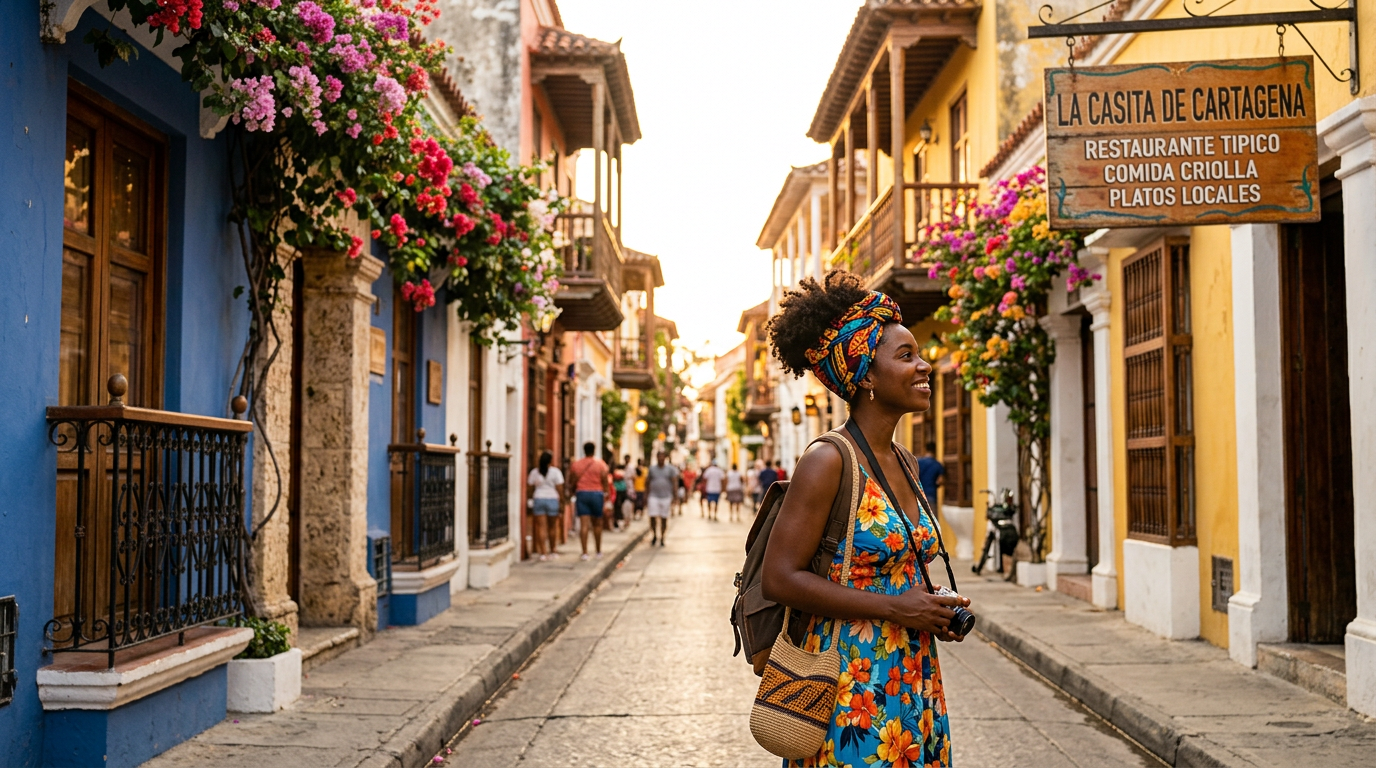
In Latin America, particularly in Afro-Latin communities (Cartagena, Cali, Brazil's Bahia), natural hair styles carry positive cultural recognition and are celebrated rather than exoticized. Many Black travelers report that natural hair feels the most socially natural in these environments.
Replies & Discussion
Sign in as a member to reply to this post