
How to Learn Spanish in 1 Year: The Ultimate Step-by-Step Roadmap
Back to CategoryHow to Learn Spanish in 1 Year: The Ultimate Step-by-Step Roadmap
The Language That Will Change Everything About How You Travel
Spanish is spoken by over 560 million people across 21 countries on four continents. It is the official language of Mexico, Colombia, Argentina, Spain, Peru, Chile, Cuba, Venezuela, Ecuador, Bolivia, Dominican Republic, Honduras, Paraguay, El Salvador, Nicaragua, Costa Rica, Panama, Uruguay, Guatemala, Equatorial Guinea, and Puerto Rico. It is the second most spoken language by native speakers in the world, and the third most spoken language overall when second-language speakers are included.
When I decided to learn Spanish, I was a 27-year-old marketing professional from Atlanta who had never studied a foreign language seriously. I had taken two years of Spanish in high school and retained approximately eight words and a vague memory of conjugating the verb hablar. I had no particular aptitude for language learning that I was aware of. What I had was a decision: I was going to Medellín, Colombia for a year, and I wanted to actually live there, not just survive as an English-speaking tourist in a Spanish-speaking city.
Twelve months later, I held a C1-level Spanish conversation with a Colombian immigration officer — chatting, joking, discussing the weather, asking about his family — while he processed my visa extension. He told me my Paisa accent was excellent. That moment is the reason I am writing this post.

Why Spanish Is the Best First Foreign Language for Diverse Travelers
Spanish has several structural features that make it significantly more accessible to English speakers than most other major world languages:
- Phonetic spelling: Spanish is written almost exactly as it sounds. Unlike English, which has notoriously irregular spellings, Spanish follows consistent phonetic rules. Once you learn the sounds (which takes about two weeks), you can read anything aloud correctly even if you do not know the meaning.
- Shared vocabulary: English and Spanish share thousands of cognates — words that are similar or identical in both languages because both drew from Latin and French. Words ending in -tion in English often become -ción in Spanish: nation/nación, station/estación, situation/situación. Words ending in -ous often become -oso: famous/famoso, curious/curioso. This gives you a head start of hundreds of words from day one.
- No tonal system: Unlike Mandarin, Cantonese, Vietnamese, or Thai, Spanish is not a tonal language. The same word does not mean different things depending on how high or low your voice goes. This eliminates one of the biggest barriers in East and Southeast Asian language acquisition.
- Global reach for travelers: Learning Spanish does not open one country — it opens 21. From the beaches of Puerto Rico to the glaciers of Patagonia, from the old medinas of Equatorial Guinea to the colonial squares of Cartagena, one language connects an enormous swath of the world's most compelling travel destinations.
For diverse travelers specifically — particularly Black travelers, South Asian travelers, and other travelers of color — Spanish-speaking Latin America offers travel experiences that are culturally rich, affordable, and frequently more welcoming than many English-speaking destinations. The Afro-Latino population in Colombia, Brazil, Cuba, and Panama is enormous and culturally influential. Speaking Spanish opens doors to conversations, communities, and experiences that remain completely closed to those who communicate only in English.
The Honest Timeline: What You Can Achieve in 12 Months
Let me be direct about what 12 months of dedicated study will and will not get you:
| Timeframe | CEFR Level | What You Can Do | What Remains Hard |
|---|---|---|---|
| Month 1–2 | A1 | Basic greetings, numbers, simple requests, ordering food, asking directions | Everything involving grammar or speed |
| Month 3–4 | A2 | Talk about yourself, navigate basic situations, understand slow clear speech | Following native conversations, expressing nuance |
| Month 5–6 | B1 | Handle travel independently, discuss simple topics, read basic texts | Fast speech, regional accents, abstract topics |
| Month 7–9 | B2 | Converse naturally on most topics, watch Spanish TV without subtitles, read novels | Native-speed slang, professional vocabulary |
| Month 10–12 | C1 | Near-fluent speech, academic and professional topics, understand regional dialects | Perfect mastery of subjunctive and idioms |
This timeline assumes 45–60 minutes of daily practice (not occasional study) and some form of immersion or regular conversation with native speakers. With less consistent study, add 6–12 months to reach the same levels. With full immersion (living in a Spanish-speaking country), you can compress this significantly.
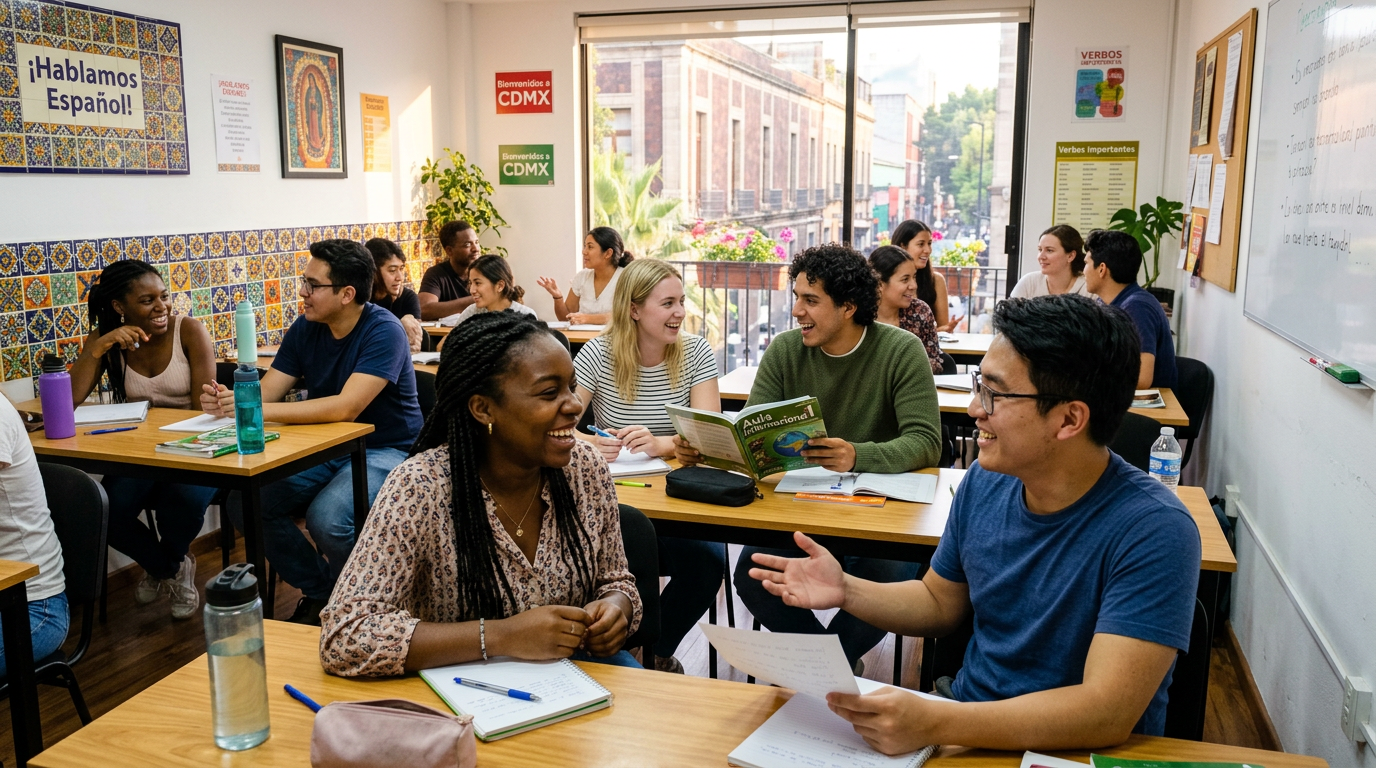
Month-by-Month Study Plan: The Actual Roadmap
Months 1–2: Building the Foundation (A1)
The first two months are about building the mental infrastructure for the language. Do not try to speak yet. Focus on:
- Pronunciation first: Spend the first two weeks doing nothing but pronunciation. Learn the Spanish alphabet, master the vowels (a, e, i, o, u — pronounced the same way every time, unlike English), and nail the tricky letters: the Spanish R (a flapped or rolled R), the Spanish J (a breathy H sound), the LL (pronounced like a Y in most of Latin America), and the Ñ.
- Anki for vocabulary: Download Anki (free) and use a pre-built deck of the 1,000 most common Spanish words. Study 15–20 new cards per day. Review your existing cards daily. By the end of month 2, you will know 600–800 words — enough to understand fragments of real conversation.
- Duolingo for habit formation: Use Duolingo for exactly 15 minutes per day, every day, in addition to your Anki practice. Duolingo alone is insufficient, but it builds the daily study habit that will carry you through harder months.
- Essential phrases: Memorize 50 core phrases by end of week 4. These include: greetings (¿Cómo estás? / Mucho gusto), expressing needs (Necesito / Quiero / ¿Puede ayudarme?), numbers 1–100, basic time expressions (hoy, mañana, ahora, después), and the most common question words (¿Qué? ¿Quién? ¿Dónde? ¿Cuándo? ¿Por qué? ¿Cómo? ¿Cuánto?).
"The hardest part of learning a language is the first 30 days. You feel like you're memorizing random sounds that mean nothing. Push through. The click moment — when words start connecting to meanings automatically — usually comes around week 6 for most learners." — Carlos, Spanish teacher at Instituto Cervantes, Bogotá
Months 3–4: First Real Conversations (A2)
By month 3, you have enough vocabulary to attempt real conversations. This is where most learners quit — because speaking is humbling and frustrating. Lean into the discomfort.
- HelloTalk or Tandem: Find a language exchange partner on HelloTalk or Tandem. You practice Spanish; they practice English. Aim for three 30-minute sessions per week. Be honest about your level. Native speakers are generally patient with sincere learners.
- Pimsleur audio lessons: Add 30 minutes of Pimsleur (audio-only Spanish lessons designed for commutes and walks) to your routine. Pimsleur uses spaced repetition for spoken phrases and forces you to recall words under time pressure — a critical skill for real conversation.
- Grammar: Present tense + SER vs. ESTAR: Month 3's grammar focus is mastering the present tense conjugation of regular verbs (-ar, -er, -ir) and the critical SER vs. ESTAR distinction. This distinction — which Spanish splits into two entirely different "to be" verbs — trips up English speakers for months. Ser is used for permanent or essential qualities (identity, nationality, profession). Estar is used for temporary states, location, and feelings. Master this now and you will thank yourself later.
- Grammar: Preterite vs. Imperfect past tense: Month 4 introduces past tense. The preterite (Pretérito Indefinido) describes completed actions: Comí una arepa (I ate an arepa). The imperfect (Pretérito Imperfecto) describes ongoing or habitual past states: Comía arepas todos los días (I used to eat arepas every day). These two tenses working together are the foundation of storytelling in Spanish.
Months 5–6: Reaching Independence (B1)
B1 is a major milestone. At B1, you can handle any routine travel situation independently — check into a hotel, negotiate at a market, get medical help, explain your dietary restrictions, follow most of a conversation between native speakers speaking slowly.
- Switch your phone and devices to Spanish: This sounds minor. It is not. When your phone interface, your maps, your weather app, and your news notifications are all in Spanish, you get hundreds of low-stakes reading repetitions per day. The vocabulary that sticks is the vocabulary you see and use repeatedly.
- Start watching Spanish TV: Begin with telenovelas (Mexican soap operas) with Spanish subtitles (not English). The dramatic, emotional content makes comprehension easier because body language and context reinforce meaning. Netflix series like Club de Cuervos, Narcos: Mexico (authentic Mexican Spanish), and Élite (Castilian Spanish) are excellent.
- Spanish podcasts: Coffee Break Spanish (beginner to intermediate) and Notes in Spanish (intermediate) are the best-designed podcasts for this level. Listen during commutes, walks, and exercise.
- Grammar: Subjunctive mood (present): The subjunctive is the single greatest challenge of Spanish grammar for English speakers. English has a vestigial subjunctive ('I suggest that he be here') but Spanish uses it constantly and systematically for wishes, doubts, emotions, and hypotheticals. Start learning it now, even imperfectly. You will use it incorrectly for months before it becomes natural.

Months 7–9: Conversational Fluency (B2)
B2 is the level at which Spanish becomes genuinely useful for deep travel. You can negotiate, joke, discuss history and politics, explain complex situations, and understand the majority of what you hear in everyday conversation.
- Italki for professional tutors: Upgrade from language exchange partners to professional tutors on Italki. Budget $8–15 per hour for Colombian, Mexican, or Peruvian tutors (generally excellent teachers at affordable rates). Do two one-hour sessions per week. Focus sessions on: reading aloud and correcting pronunciation, discussing recent news in Spanish, and structured grammar review of your weak areas.
- Read your first Spanish novel: Start with El Alquimista (The Alchemist) by Paulo Coelho, which was written in Portuguese but has a clear, clean Spanish translation. Or try Como Agua para Chocolate (Like Water for Chocolate) by Laura Esquivel — a Mexican novel with beautiful, accessible prose. Use a Kindle with built-in Spanish dictionary so you can tap any unfamiliar word instantly without breaking your reading flow.
- Spanish music as study: Reggaeton and Latin trap are actually excellent for language learning — the lyrics are simple, repetitive, and the vocabulary is contemporary. Artists like Bad Bunny, J Balvin, and Karol G will teach you modern colloquial Spanish faster than any textbook.
Months 10–12: Approaching Fluency (C1)
The final stretch. By month 10 you are no longer a learner in the traditional sense — you are a Spanish speaker refining your skills. The study shifts from structured learning to living.
- Think in Spanish: This sounds mystical but is practical. When you are cooking, walking, waiting in line — narrate your thoughts in Spanish. Describe what you see. If you do not know a word, look it up. This internal monologue practice is what bridges the gap between translation (thinking in English, converting to Spanish) and fluency (thinking directly in Spanish).
- DELE or SIELE exam preparation: Consider taking the DELE (Diplomas de Español como Lengua Extranjera) or SIELE exam for an internationally recognized certification. Preparing for the B2 or C1 exam will identify precisely where your weaknesses lie and force systematic improvement.
- Formal writing practice: Write one 300-word essay per week in Spanish on any topic. Have your Italki tutor correct it. Written errors are different from spoken errors, and fixing them will improve your spoken Spanish too.
The Resources That Actually Work
| Resource | Type | Cost | Best For | Level |
|---|---|---|---|---|
| Anki | Flashcard app | Free (desktop) / $25 iOS | Vocabulary retention | All levels |
| Pimsleur Spanish | Audio lessons | $20/month | Spoken phrase acquisition | A1–B1 |
| Italki | Tutor marketplace | $8–25/hour | Conversation practice + correction | A2+ |
| HelloTalk / Tandem | Language exchange app | Free | Informal conversation practice | A2+ |
| Coffee Break Spanish | Podcast | Free | Structured listening comprehension | A1–B2 |
| SpanishPod101 | Online course | $8–25/month | Structured curriculum + dialects | A1–C1 |
| Language Transfer: Spanish | Audio course | Free | Grammar intuition building | A1–A2 |
| Dreaming Spanish (YouTube) | Comprehensible input video | Free | Listening immersion | A2–B2 |
| Clozemaster | Gamified grammar practice | Free / $8/month | Advanced grammar in context | B1+ |
Which Dialect Should You Learn?
This is a question every beginner eventually asks, and the answer is: it matters less than you think. All Spanish dialects are mutually intelligible — a Mexican can understand an Argentine, a Spaniard can understand a Cuban, even if they notice the accent and some vocabulary differences. You will be understood everywhere regardless of which dialect you base your Spanish on.
That said, practical guidance:
- If you plan to travel primarily in Latin America: Learn Latin American Spanish (also called Español Neutro or Español de América). Mexican Spanish is the most widely understood and is the dominant voice of Latin American media, music, and streaming.
- If you plan to visit Spain: Castilian Spanish (Español de España) has distinct pronunciation — the famous "lisp" (actually a distinction between s and c/z sounds), the vosotros pronoun for informal plural "you all," and some vocabulary differences. Spend a few weeks getting used to the accent before arrival.
- Colombian Spanish: Widely considered the clearest and most phonetically precise Spanish for learners. Bogotá's accent in particular is often cited as the most neutral in Latin America — slow, clear, and without heavy slang. If you are choosing a language school location, Colombia (Medellín, Cartagena, or Bogotá) is an excellent choice.

The 60 Spanish Phrases Every Traveler Must Know Before They Land
Before you board your first flight to a Spanish-speaking country, commit these 60 phrases to memory. Not recognition — production. You should be able to say them without thinking.
Essential Greetings and Politeness
- Hola — Hello
- Buenos días / Buenas tardes / Buenas noches — Good morning / afternoon / evening
- ¿Cómo estás? / ¿Cómo está usted? — How are you? (informal / formal)
- Mucho gusto — Nice to meet you
- Por favor — Please
- Gracias — Thank you
- De nada — You're welcome
- Disculpe / Perdón — Excuse me / Sorry
- ¿Habla usted inglés? — Do you speak English?
- No hablo bien el español — I don't speak Spanish well
- ¿Puede repetir más despacio? — Can you repeat more slowly?
- No entiendo — I don't understand
Navigation and Getting Around
- ¿Dónde está…? — Where is…?
- ¿Cómo llego a…? — How do I get to…?
- A la derecha / A la izquierda — To the right / To the left
- Recto / Derecho — Straight ahead
- ¿Cuánto cuesta? — How much does it cost?
- Quiero ir a… — I want to go to…
- ¿Hay un baño por aquí? — Is there a bathroom nearby?
- Llámeme un taxi, por favor — Call me a taxi, please
Food and Dining
- Una mesa para dos, por favor — A table for two, please
- ¿Qué recomienda? — What do you recommend?
- Sin… (gluten / mariscos / carne) — Without… (gluten / seafood / meat)
- Soy alérgico/a a… — I am allergic to…
- La cuenta, por favor — The bill, please
- ¿Está incluido el servicio? — Is service included?
Emergencies and Safety
- Necesito ayuda — I need help
- Llame a la policía — Call the police
- Me robaron — I was robbed
- Necesito un médico — I need a doctor
- ¿Dónde está el hospital más cercano? — Where is the nearest hospital?
- Tengo una emergencia — I have an emergency
The Cultural Knowledge That Language Classes Do Not Teach You
Language and culture are inseparable. Learning Spanish vocabulary and grammar without understanding the cultural contexts where that language lives will leave you technically correct but socially tone-deaf. Here is what no textbook covers:
Usted vs. Tú: Spanish has two forms of "you" — the informal tú and the formal usted. When to use which varies dramatically by country. In Colombia, especially Medellín, locals use usted for everyone including friends and family — it has lost its formal connotation and sounds warm rather than distant. In Mexico City, tú is standard between peers. In Argentina, neither is used — instead, they use vos, a distinct pronoun with its own conjugation. Know the local norm before you arrive.
Time perception: In most of Latin America, time is treated more fluidly than in Northern Europe or the United States. A dinner invitation for 8 PM means guests will arrive at 9–9:30. A meeting scheduled for 10 AM might start at 10:30. This is not rudeness — it is a different cultural relationship with time. Adjust your expectations.
Physical greeting norms: In most of Latin America, the standard greeting between acquaintances — including business acquaintances — involves one kiss on the cheek (Argentina) or a kiss on the cheek combined with a handshake or hug (Colombia, Mexico). Between men in some regions, hugging or a firm double backslap accompanies the handshake. Refusing this physical greeting can seem cold or even rude. When in doubt, follow the local person's lead.
Black and Afro-Latin identity: Racial categorization in Latin America operates very differently from the United States. Colombia, Brazil, Cuba, Panama, and the Dominican Republic have enormous Afro-descendant populations. The language around race (negro/negra used as neutral descriptors, not slurs; moreno as a common term; the complex mixed-race vocabulary from colonial casta systems) is different from American usage. Research the specific country before you go.
Where to Go to Practice Your Spanish as a Diverse Traveler
Some Spanish-speaking destinations are notably excellent for language learning combined with cultural safety and welcoming environments for travelers of color:
- Medellín, Colombia: Warm, friendly culture, exceptionally clear Spanish, large digital nomad and language learning community, significant Afro-Colombian presence in the Chocó region and Caribbean coast. The Paisa accent is considered among the most pleasant in Latin America.
- Oaxaca, Mexico: Rich indigenous culture, slower pace, stunning food scene, welcoming traveler community, proximity to indigenous language communities where Spanish itself is a second language — which makes locals particularly patient with non-native Spanish speakers.
- Cartagena, Colombia: Afro-Colombian majority city on the Caribbean coast. The language is faster and more musical than Bogotá's, but the culture is enormously welcoming to visitors of African descent who are seeking connection to Afro-Latin heritage.
- Buenos Aires, Argentina: European-influenced, cosmopolitan, strong café culture ideal for reading and studying, vibrant arts scene. Note: Argentine Spanish (Rioplatense) has a distinctive Italian-influenced accent and uses vos rather than tú, which requires some adjustment.
- Salamanca or Valencia, Spain: Excellent Spanish language schools, historic university town atmosphere, slower pace than Madrid, real student culture. Ideal for immersion programs.
The Mindset That Actually Produces Fluency
After coaching dozens of travelers through language learning, I have observed one consistent pattern: the people who reach fluency are not those with the most natural talent. They are those who have made peace with being wrong.
Speaking a new language in public — especially as a native English speaker who is accustomed to communicating with effortless precision — is an ego challenge. You will mispronounce words. You will use the wrong tense. You will confidently say something that makes no grammatical sense. And then the person you are speaking to will probably understand you anyway, or politely correct you, or laugh warmly with you at the error.
The learners who quit are the ones who decide that being understood 70% of the time and wrong 30% of the time is failure. The learners who reach fluency are the ones who understand that being understood 70% of the time and wrong 30% of the time is day 90 of a year-long journey — and that by day 365, both numbers will have transformed.
"Fluency is not the absence of mistakes. Fluency is the ability to keep talking despite making them." — my Spanish teacher in Medellín, Juliana, after I apologized for the eleventh time in one lesson.
One year from today, you could be having a real conversation in one of the most beautiful languages in the world. You could be ordering off a menu in Buenos Aires without a translation app. You could be getting the local price at a market in Oaxaca because the vendor knows you are not just a tourist passing through — you are someone who bothered to learn the language of her country. You could be making friends in Medellín who have no other common language with you except Spanish, which means you have truly arrived.
Start today. Turn your phone to Spanish tonight. Download Anki in the morning. The roadmap is here. All that remains is the decision to walk it.
Replies & Discussion
Sign in as a member to reply to this post