
How to Handle Money Abroad Without Getting Robbed by Your Bank
Back to CategoryHow to Handle Money Abroad Without Getting Robbed by Your Bank
The Hidden Cost of International Banking
International banking fees are one of the most consistently underestimated travel costs. Foreign transaction fees (typically 1–3% of every transaction), ATM fees (the local ATM often charges $3–7 per withdrawal, then your home bank adds another $2–5), and currency conversion fees (the rate your bank applies when converting currencies is typically 3–5% worse than the mid-market rate you see on Google) compound across every purchase and withdrawal throughout a trip.
For a 2-week trip with moderate spending, these fees can easily total $150–400. For a long-term traveler or expat, they represent thousands of dollars annually. All of these costs are completely avoidable with the right account setup.
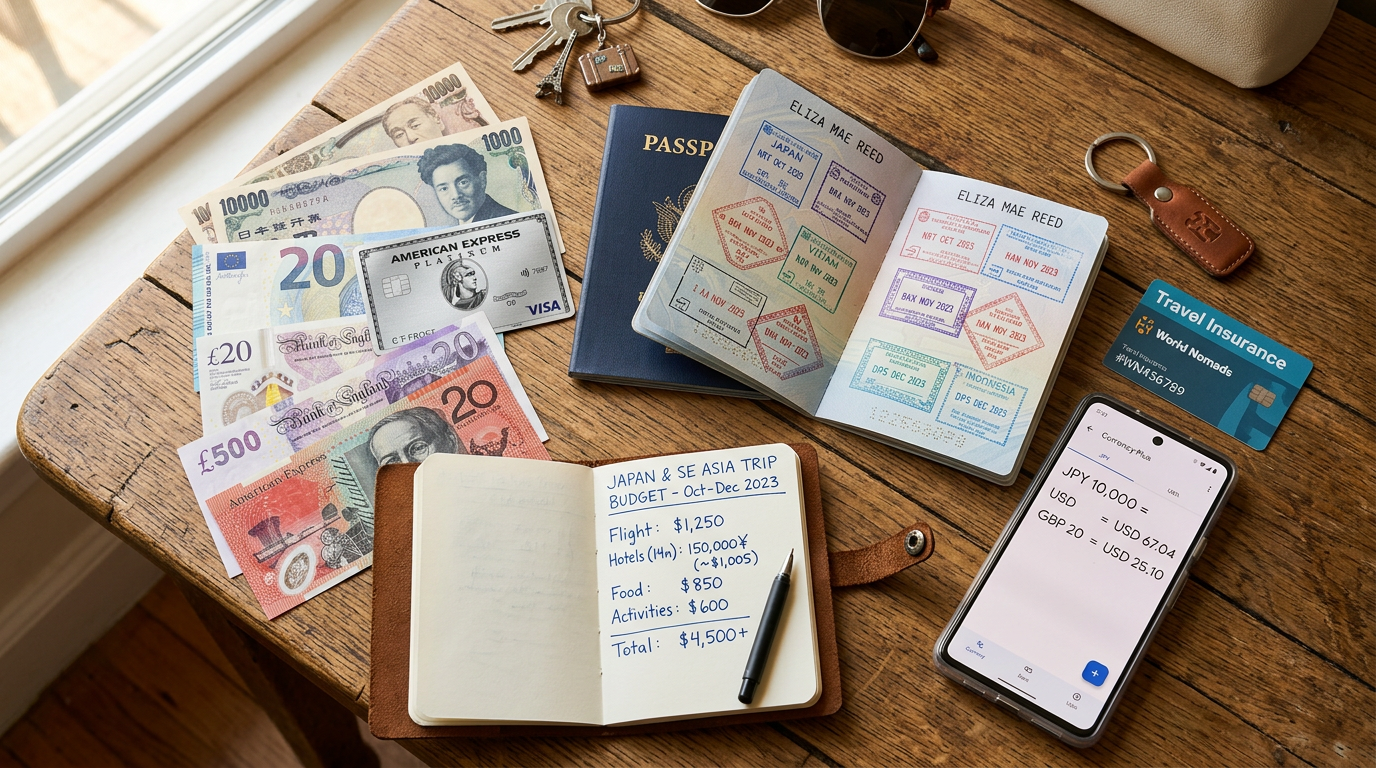
The Fee-Free International Banking Stack
Charles Schwab Investor Checking Account (US residents): The gold standard for US-based international travelers. Zero foreign transaction fees. Unlimited ATM fee reimbursement globally — any ATM fee charged anywhere in the world is refunded at the end of the month. The Schwab account must be opened in conjunction with a Schwab brokerage account (which has no fees or minimums). There is no downside to this account. Every US-based international traveler who does not have it is leaving money on the table.
Wise (formerly TransferWise) — Available globally: Multi-currency account with a linked debit card. Converts currency at the mid-market rate with minimal fees (0.3–1% depending on currency pair). Particularly useful for travelers holding multiple currencies simultaneously. The Wise card is the best tool for day-to-day purchases in local currency anywhere in the world for non-US residents or US residents who want an additional option.
Revolut: Similar to Wise — multi-currency, competitive rates, global ATM access. The free tier has monthly limits on fee-free ATM withdrawals; the paid tier removes these. Better in some European contexts than Wise; comparable globally.
Cash vs. Card: The Strategic Balance
A fully cashless approach works in most developed-world destinations. It fails in:
- Local markets, street food vendors, and small family businesses in most developing-world contexts
- Rural areas and smaller towns in most countries
- Certain countries where card infrastructure is genuinely limited (parts of West Africa, Central Asia)
- Any situation where the power is out and card terminals do not work (more common than you think)
The practical balance: always carry local currency equivalent to 2–3 days of estimated cash spending. Never carry large amounts of cash at once — if you are robbed or pickpocketed, the goal is to limit the loss to an amount that is inconvenient but not catastrophic. Replenish from ATMs as needed rather than extracting large amounts.
ATM Safety: The Essential Practices
- Use ATMs inside bank branches or recognized bank-branded ATMs on building exteriors: Not standalone machines in convenience stores or tourist areas, which have higher skimming device rates
- Cover your hand when entering your PIN: Skimmers often use small cameras positioned to capture PIN entry. Covering is a simple physical countermeasure
- Decline "dynamic currency conversion": When an ATM or card terminal offers to process in your home currency (rather than local currency), always decline. The rate offered is significantly worse than your bank's mid-market conversion rate
- Withdraw larger amounts less frequently rather than small amounts repeatedly, to minimize per-withdrawal fee impact if unavoidable
Replies & Discussion
Sign in as a member to reply to this post