
Experiencing Diwali in Jaipur as a Non-Indian Traveler: A Respectful Guide
Back to CategoryExperiencing Diwali in Jaipur as a Non-Indian Traveler: A Respectful Guide
The Festival of Lights at Its Source
I grew up celebrating Diwali with Indian classmates in London — clay diyas on windowsills, mithai from the corner shop, a general sense of warmth and celebration borrowed graciously from a culture not my own. When I finally traveled to India during Diwali season, specifically to Jaipur in Rajasthan, I understood for the first time that what we celebrate in diaspora is the shadow of a thing whose substance is extraordinary.
Jaipur During Diwali: What Actually Happens
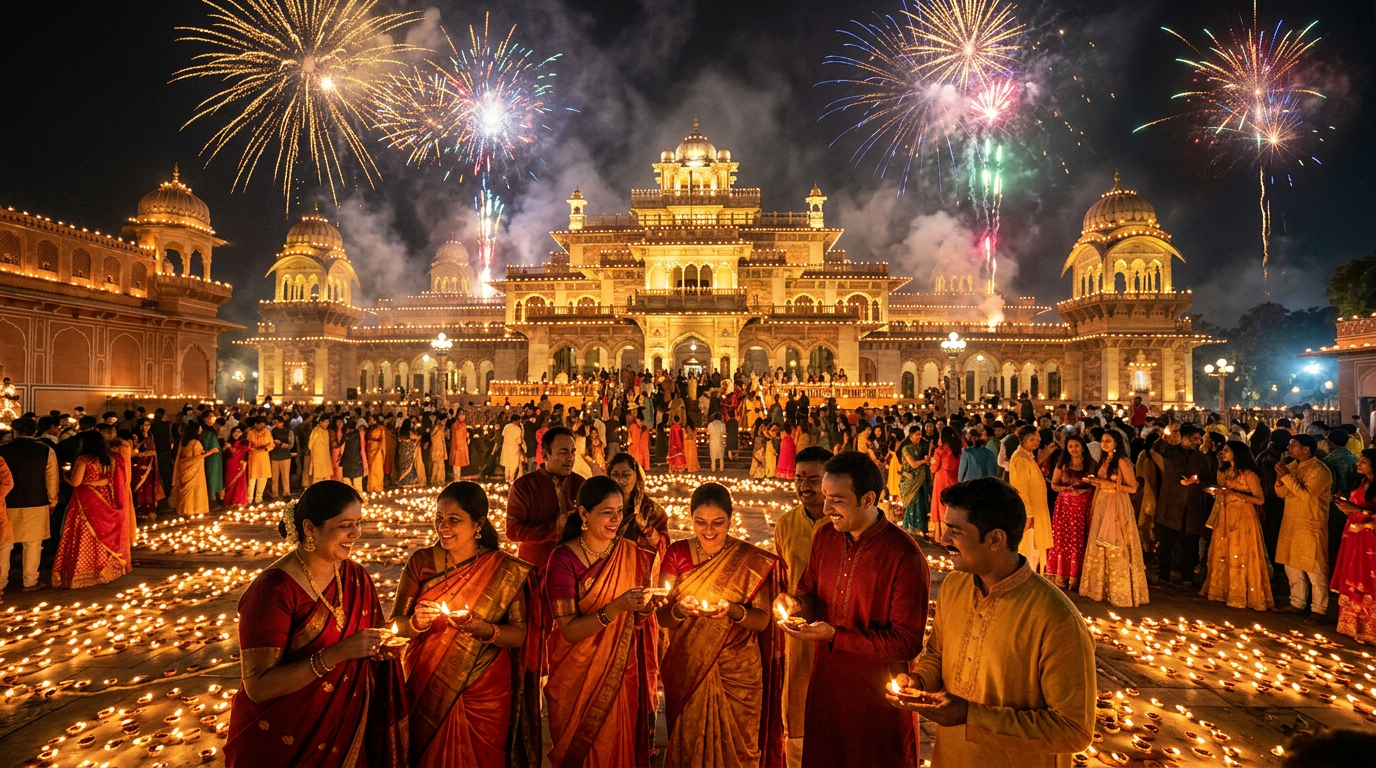
The preparations begin a week before. Homes are deep-cleaned, repainted, and decorated. The markets fill with clay lamps in thousands of designs, sweet boxes stacked six feet high, and fireworks of varieties I had never seen. On Diwali night itself, the city transforms: every rooftop, doorstep, and windowsill is lit with diyas, the sky fills with fireworks that begin at dusk and don't end until well past midnight, and the streets fill with families in their best clothes exchanging sweets and blessings.
The sound is overwhelming. The light is overwhelming. I cried, twice, for reasons I could not fully articulate.
"Diwali in Jaipur is a collective decision to make the world beautiful. For one night, everyone agrees to do it at the same time."
How to Experience Diwali Respectfully as an Outsider
Some practical and ethical guidance for non-Indian travelers wanting to participate:
- Accept invitations: If a local family invites you to celebrate with them, accept gratefully and graciously. This is the most authentic Diwali experience possible. Bring sweets as a gift.
- Dress appropriately: Wear traditional Indian dress if invited to a family celebration — kurta for men, salwar kameez or saree for women. It is appreciated, not appropriative, when done with awareness.
- Be respectful of the religious dimension: Diwali is a Hindu religious celebration. Understanding its significance — the return of Rama, the victory of light over darkness — adds meaning to your participation.
- Fireworks and air quality: India's Diwali fireworks are loud and dense. If you have respiratory issues, consider an air quality mask for the main night. Delhi becomes particularly challenging.
- Why Jaipur specifically: Smaller than Delhi, more walkable, and with a concentration of heritage buildings that are spectacular when lit up. The Hawa Mahal by lamplight is an image that does not leave you.
Beyond Diwali: A Week in Rajasthan
Build five days around the festival: two days before for Jaipur (forts, markets, food tours), two days after for Jodhpur or Udaipur (both worth the four-hour drive), and one recovery day somewhere with good chai and a view. Rajasthan in October-November is the state at its most accessible and beautiful.
Replies & Discussion
Sign in as a member to reply to this post